Among the last details we worked out in the design process for the exterior restoration plan were the bulkhead entrances. In our 2017 Year-End Update post, we addressed the structural and archeological evidence we discovered about the bulkhead entrances in the front and back of the stone side of the structure. This evidence has been crucial for us as we draw up the restoration plans for these cellar openings.
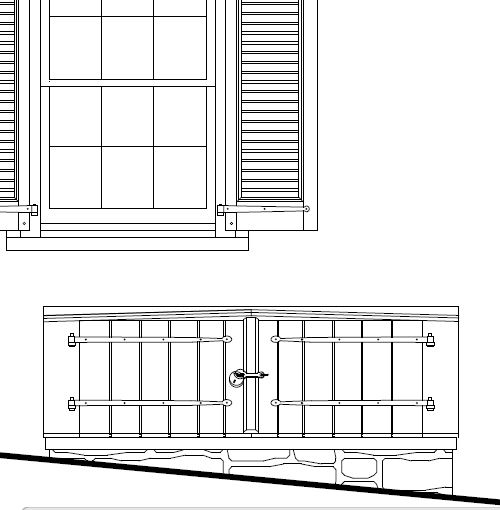
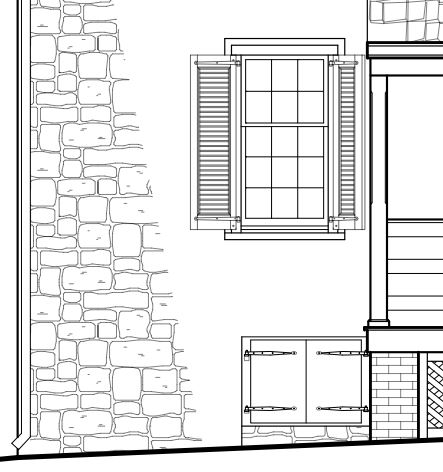
Bulkhead entrances to cellars were once common in vernacular early-American domestic and commercial architecture. Today, when they survive in historic houses, they tend to be found on the back or on the side of the structure. The original bulkhead entrance for the Stone House was in the front of the stone side of the structure to the right (or south) of the front door and under the southern front window. (See architectural plan drawing above.) This relatively wide bulkhead entrance remained in use through the mid-nineteenth century and would therefore have been in existence during the 1830 period of our restoration plan. While its location in the front would have made it useful for loading goods into the cellar from the street, it was not as convenient for those who needed to access it from the back of the house. Food storage before refrigeration was most often accomplished in cellars, where the temperatures were more consistently cool. Perhaps it was the desire to provide easier access to the food storage in the cellar from the rear yard next to the detached kitchen that brought about the construction of the rear bulkhead entrance behind the stone side. (See architectural plan drawing below.) Structural evidence and the numbers “1828” pecked into a stone above the rear bulkhead entrance point to that year as the time when it was constructed. Thus, by 1830 there were two bulkhead entrances into the cellar under the stone side of the building.
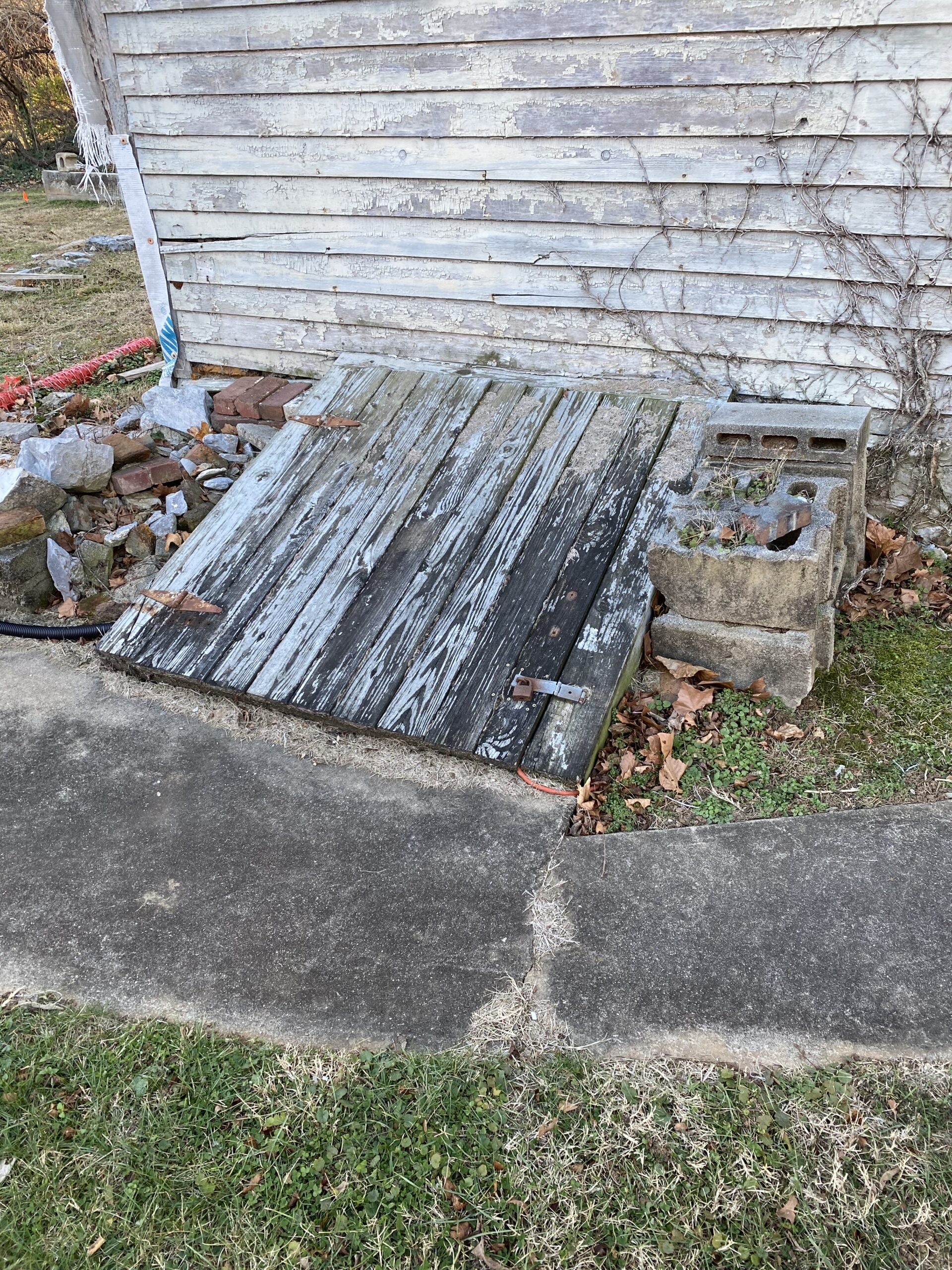
After the property was subdivided in 1843, the owners of the log side no longer had access to the cellar under the stone side of the structure. It was probably the need for a food storage area that compelled the new owners of the log side to dig a cellar under that side of the house. Structural evidence in that cellar implies that subsequent owners of the log side expanded that cellar over time. The bulkhead entrance under the north gable end of the house leads to that cellar under the log side. (See photo below.) It postdates our 1830 restoration period and will therefore be removed as part of the restoration plan. In turn, we will excavate a passage between the two separate cellars so that we will have access to the areas under both sides of the building.